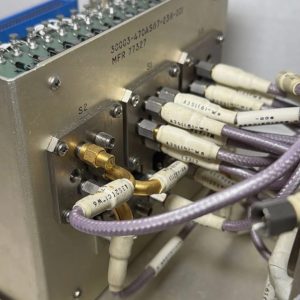
The Aviation Switching Module – NSN 4920-01-250-2696 (AS-IS / Untested) combines recognizable aviation hardware, an identifiable National Stock Number, potential electrical-control functionality, and commercial value for informed specialist buyers.
An Aircraft Switching Module may control, route, select, isolate, or distribute compatible electrical signals or circuits, while an Aerospace Switching Module should be evaluated according to its exact internal design and intended equipment relationship.
Every Aircraft Power Switching Module or Aircraft Signal Switching Module should be assessed individually because connectors, voltage, current, control logic, and system compatibility can vary significantly.
Whether described as an Aviation Control Module, Aircraft Switching Unit, Aerospace Power Distribution Module, Aircraft Electrical Control Unit, or Aviation Power Control Module, the component should remain identified primarily by its NSN and physical markings.
Identifying the Aerospace Switching Unit
The National Stock Number provides an important catalog reference that can help buyers research the item’s supply history, technical identity, related part numbers, and possible equipment application.
The exact manufacturer, model number, electrical specifications, switching functions, and associated equipment should be confirmed through reliable technical references whenever available.
Untested Switching Module Condition
The condition description should be understood as a limitation rather than a suggestion that the unit is probably operational.
Professional evaluation protects the module, technician, test equipment, and any associated aerospace system.
Aircraft Switching Module Applications
The actual role depends on internal circuitry, switch configuration, connector pinout, associated system design, and technical documentation.
Missing knobs, guards, labels, connectors, covers, or fasteners may reduce completeness.
Inspecting Aerospace Electrical Hardware
Careful exterior evaluation can reveal evidence of previous use or damage before the unit is opened.
Unknown connectors should not be forced into visually similar plugs.
Aircraft Electrical Hardware Review
Discoloration near connectors or switches may indicate electrical heat, chemical exposure, or ordinary aging and should be investigated.
The module should not be modified simply to produce a temporary power-on result.
Aviation Electrical Control Module Functions
The exact interface must be established through diagrams, manuals, connector data, or verified system information.
Aggressive solvents, scraping, repainting, or polishing may remove original information.
Aviation Power Circuit Management
A switch that moves normally may still contain burned, corroded, welded, or high-resistance electrical contacts.
Power-input and output terminals should be checked for looseness, heat discoloration, corrosion, damaged insulation, and unsuitable previous repair.
Aerospace Electrical Control Unit Evaluation
Its internal design may include electromechanical components, solid-state devices, wiring assemblies, circuit protection, or specialized connectors.
A common-looking relay, switch, resistor, connector, or wire may not be an acceptable substitute.
Aircraft Signal Switching Module Uses
The pinout and signal type should be confirmed before continuity or injection testing.
Shielding, grounding straps, connector shells, cable clamps, and enclosure bonding can influence Aviation Switching Module – NSN 4920-01-250-2696 (AS-IS / Untested) signal performance where included in the original design.
Aviation Module System Integration
Clear intended use helps establish realistic expectations for an AS-IS Aviation Control Module.
Compatibility should be verified through NSN, part number, manufacturer, connector layout, revision level, modification status, and equipment application.
Restoring Aviation Switching Hardware
The unit can provide parts, reference information, display value, training opportunities, or a candidate for professional restoration.
Training use should avoid destructive modifications when the component has collectible or restoration value.
Aerospace Circuit Management
An Aerospace Power Distribution Module generally manages or routes electrical power among compatible circuits, although the exact function of this NSN should not be assumed without supporting information.
The original installation orientation should be researched where possible.
Control Unit Connector and Switch Review
Dust and surface dirt can often be removed carefully, but aggressive cleaning may damage labels, seals, finishes, or electrical parts.
Functional evaluation should proceed in stages, beginning with research and non-powered inspection before controlled electrical testing.
Aviation Electrical Power Management
Responsible product information protects buyers seeking an Aviation Power Control Module.
The equipment should remain disconnected and protected during storage.
Electronic Switching Module Applications
Without those references, operational claims should remain limited.
Repair documentation can help distinguish module faults from system faults.
Aerospace Switching Unit Storage and Handling
Proper storage helps preserve the Aerospace Switching Unit for testing, restoration, or collection.
Insured and trackable transportation supports responsible sales of specialized aviation hardware.
Buying AS-IS Aviation Electronics
AS-IS equipment may offer attractive value when the purchaser has the knowledge and resources required for evaluation.
Images should show labels, switches, connectors, enclosure surfaces, mounting points, fasteners, seals, internal areas if opened professionally, and included accessories.
Untested Aviation Equipment Condition Checklist
A detailed review reduces misunderstanding and supports realistic purchasing decisions.
- Request photographs of all labels, switches, controls, connectors, mounting points, enclosure surfaces, seals, fasteners, and included accessories.
- Inspect switches, knobs, indicators, connectors, pins, wiring, and terminals for damage, looseness, contamination, overheating, or unauthorized repair.
- Report shipping damage, missing accessories, identification differences, undisclosed repairs, or altered condition promptly.
Evaluating an Untested Electrical Module
The module should not be powered until input requirements, polarity, grounding, circuit protection, and expected loads are understood.
Powered testing should proceed gradually while monitoring current, temperature, smell, noise, indicators, and unexpected behavior.
Aircraft Electrical Module Repair Planning
Professional restoration can improve the usability and value of the Aerospace Switching Module.
A repaired module may still require system-level testing or additional qualification before installation.
Buying NSN 4920-01-250-2696
When responsibly inspected, stored, tested, repaired, and documented, the Aviation Switching Module – NSN 4920-01-250-2696 (AS-IS / Untested) can remain a valuable aerospace electrical component.
Careful technical and commercial evaluation can reduce equipment damage, incompatible purchases, missing-accessory costs, testing hazards, and restoration delays.
Whether the requirement is an Aircraft Switching Module, Aerospace Switching Module, Aircraft Electrical Switching Module, or Aviation Electrical Control Module, exact identification should guide the purchase.
With responsible purchasing, NSN research, connector protection, current-limited evaluation, and documented restoration, the component can remain a useful aviation asset.